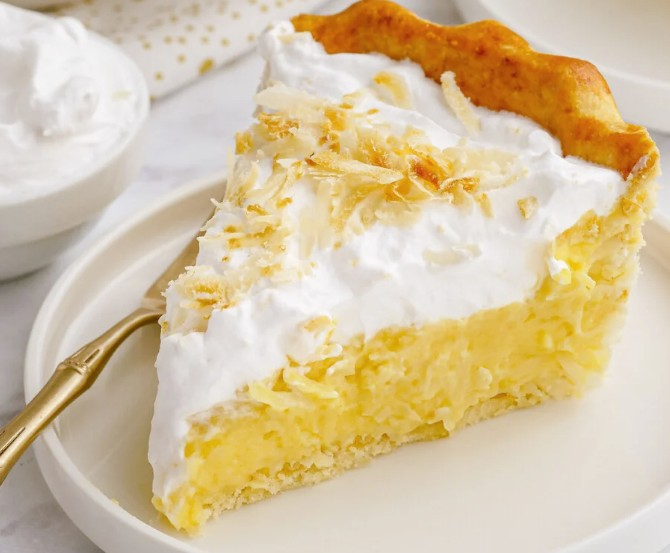
If coconut cream pie takes you back to fair days and family dinners, you’re in the right place. This keto coconut cream pie keeps that classic taste, but skips the sugar and heavy carbs, so you can enjoy it any night of the week.
This recipe is built for repeat results in a real, busy kitchen. You’ll get a crisp crust that stays firm, a smooth coconut custard that sets clean (no runny filling), and a whipped topping that holds up in the fridge. No grainy sweetener, no watery slices, no soggy bottom.
You’ll also find small technique tweaks that make a big difference, like how to thicken the custard without lumps and how to cool it the right way. The goal is simple, a pie that looks bakery-pretty and tastes like the one you remember.
And because this is a frugal family kitchen, costs can stay low. With smart swaps (like choosing the right canned coconut and buying sweetener in bulk), you can keep it budget-friendly without giving up that rich, cozy flavor.
What Makes a Keto Coconut Cream Pie “Award-Winning” (Texture, Flavor, and Clean Slices)
An “award-winning” keto coconut cream pie isn’t about fancy tricks. It’s about nailing three things every time: a custard that sets like silk (not soup), coconut flavor that tastes like the classic, and slices that lift out clean without sliding apart. When those pieces click, your pie looks bakery-level, even on a weeknight.
The biggest mistakes that ruin coconut cream pie
Runny custard usually comes from undercooking or using the wrong amount of thickener. Quick fix: cook the custard until it clearly thickens and hits the right temp, then chill it long enough to fully set before topping and slicing.
Scrambled eggs in the filling happen when yolks get shocked by hot liquid. Quick fix: temper the yolks slowly by whisking in a small amount of warm custard first, then pour that mixture back into the pot while whisking the whole time.
Gritty sweetener is almost always the wrong type, or it wasn’t dissolved before the custard thickened. Quick fix: use a powdered sweetener (it melts faster), and whisk until the mixture is smooth before it starts to set.
Soggy crust comes from skipping a par-bake or pouring in filling without a barrier. Quick fix: par-bake until lightly golden, then add a simple barrier like a thin brush of egg wash (baked for a minute) or a light cocoa-butter based coating if you use one.
Flat whipped cream happens when the cream is warm, the tools are warm, or there’s no help to keep it stable. Quick fix: chill the bowl and beaters, whip to stiff peaks, and use a stabilizer (gelatin or a keto-friendly powdered option) if you need it to hold for hours.
Keto ingredient rules for classic flavor
If you want that old-school coconut cream pie taste without sugar, focus on ingredients that bring real richness and aroma.
- Canned coconut milk (unsweetened, full-fat) gives the custard body and that “dessert case” richness. The carton stuff is thinner and can taste flat.
- Toasted coconut adds a warm, nutty smell that makes the pie taste more coconut without adding extra sweetener. A little goes a long way.
- Real vanilla rounds out the coconut and keeps the filling from tasting one-note.
- A pinch of salt makes the custard taste sweeter and more “finished,” even with less sweetener.
Sweetener choice matters, too. For a smooth custard and clean slices, powdered sweetener is your friend because it dissolves fast and helps you avoid gritty filling.
- Powdered allulose blend: tends to taste closest to sugar and stays smoother after chilling.
- Powdered erythritol monk fruit blend: works well, but can re-crystallize and feel cool on the tongue if the ratio is high. Powdered helps, and so does fully dissolving it before thickening.
For thickening on keto, you’re working with a smaller toolbox, but it’s enough:
- Egg yolks: add richness and natural thickness.
- Xanthan gum: powerful in tiny amounts, great for a glossy custard (too much turns it “snotty,” so measure carefully).
- Gelatin: helps the filling slice clean and hold longer in the fridge.
Classic thickeners like cornstarch and sugar aren’t keto-friendly, so the goal is structure from eggs plus a keto thickener that sets firmly when cold.
Tools that make the pie consistent every time
The easiest way to get “every time” results is to remove guesswork. A few basic tools make a bigger difference than extra steps.
- Instant-read thermometer: takes the fear out of custard. You’ll know when it’s cooked and safe, not just “looks thick.”
- Fine-mesh strainer: your insurance policy. Strain the custard before filling the crust to catch any tiny egg bits or coconut clumps.
- Heavy-bottom saucepan: prevents hot spots that scorch milk and curdle eggs.
- Whisk: keeps the custard smooth while it thickens.
- Pie shield or foil: protects crust edges from over-browning while the center finishes.
- Glass or metal pie plate: both work, but pick one and stick with it so bake times feel familiar. Glass helps you see browning on the bottom, metal tends to crisp faster.
- Hand mixer or stand mixer: gives whipped cream more volume and better structure than whisking by hand.
Frugal tip: buy the long-haul items used and save your money for ingredients. A saucepan, pie plate, and fine-mesh strainer are easy thrift finds. A thermometer is worth buying new (they’re affordable, and accuracy matters). A hand mixer is also a great discount-store grab if you test it first.
Ingredient List: Keto and Sugar-Free Coconut Cream Pie (Exact Measurements)
Getting a keto coconut cream pie to slice clean comes down to ratios. Too much liquid and it slumps, too little fat and it tastes thin. The lists below are measured for a 9-inch pie plate, so you can shop once, prep once, and know exactly what you’re building.
If you’re keeping things frugal, homemade crust usually costs less per pie than pre-made keto crusts. That said, a store-bought keto crust works fine when time is tight.
Keto crust ingredients (choose almond flour or coconut flour option)
Pick one crust option below. Both are sized for a 9-inch pie plate.
Almond flour crust (more classic texture)
- 2 cups almond flour (blanched, fine)
- 1/3 cup powdered sweetener
- 1/4 teaspoon salt
- 6 tablespoons unsalted butter (melted)
- 1 large egg
- 1 teaspoon vanilla extract (optional)
Coconut flour crust (nut-free)
- 1/2 cup coconut flour (sifted if lumpy)
- 1/2 cup powdered sweetener
- 1/4 teaspoon salt
- 1/2 cup coconut oil (melted)
- 2 large eggs
- 1 teaspoon vanilla extract (optional)
Keto coconut custard filling ingredients (no cornstarch, no sugar)
This filling sets without cornstarch, using egg yolks plus a keto-friendly thickener. For the smoothest, most “classic” sweetness, powdered allulose tends to give the best texture after chilling.
- 2 cans (13.5 ounces each) full-fat coconut milk (unsweetened)
- 1/2 cup heavy cream (or replace with 1/2 cup more coconut milk)
- 5 large egg yolks
- 3/4 cup powdered sweetener (powdered allulose suggested)
- 1/4 teaspoon salt
- 2 teaspoons vanilla extract
- 3 tablespoons unsalted butter
- 1 cup shredded unsweetened coconut
- 1/2 teaspoon coconut extract (optional)
Pick one thickener (use only one):
- Gelatin option: 2 teaspoons unflavored gelatin powder (about 6 grams)
- Xanthan gum option: 1/4 teaspoon xanthan gum
Sugar-free whipped topping ingredients (stable for hours)
For whipped cream that stays fluffy, start with cold cream and use a powdered sweetener so it dissolves fast and doesn’t feel gritty.
- 1 1/2 cups heavy whipping cream
- 3 tablespoons powdered sweetener
- 1 teaspoon vanilla extract
- 2 ounces cream cheese, softened (optional stabilizer)
- 1 teaspoon unflavored gelatin powder (optional stabilizer, if not using cream cheese)
- 1/4 cup toasted unsweetened coconut flakes (garnish)
Step-by-Step Directions: Bake the Keto Crust So It Stays Crisp
A keto coconut cream pie is only as good as its crust. Since almond flour and coconut flour don’t behave like wheat flour, the little details matter more. The goal is simple: a shell that bakes up dry, golden, and sturdy, so it stays crisp under a cool coconut custard and still slices clean days later.
Mix, press, and shape without cracking
Keto dough can go from perfect to greasy fast, so mix with a light hand. You want everything evenly moistened, not overworked.
- Mix just until combined. Stir the dry ingredients first, then add melted butter (or coconut oil) and eggs. Stop as soon as the dough looks like damp sand and holds together when pinched.
- Press into the pie plate in small handfuls. Drop pieces across the bottom and sides, then press them together. This avoids thin spots that crack later.
- Press evenly up the sides. Aim for the same thickness all around, about 1/4-inch is a good target. If the rim is too thin, it browns too fast and breaks when you slice.
- Use parchment to smooth. Lay a square of parchment over the dough and press with your fingers or the bottom of a measuring cup. It’s like “ironing” the crust flat without sticking.
- Dock the bottom with a fork. Poke the base 10 to 15 times. Those tiny holes let steam escape, so the bottom stays flat and crisp.
For the cleanest edges, chill the shaped crust for 15 to 30 minutes before baking. Cold fat hits the oven and firms up fast, which helps the sides hold their shape instead of slumping.
Blind bake and protect the edges
Blind baking is the difference between “pretty good” and “stays crisp tomorrow.” It dries the crust out first, so the custard doesn’t soak in.
Here’s a reliable method that works for most keto pie crusts:
- Preheat the oven to 350°F.
- Line the crust with parchment. Press it into the bottom and up the sides.
- Fill with pie weights or dry beans. This keeps the bottom from puffing and the sides from sliding down.
- Bake with weights for 12 to 15 minutes. You’re setting the shape.
- Remove the parchment and weights. Then bake 8 to 12 minutes more, until the crust looks dry and turns light golden (especially around the edges).
Keto crust edges can brown faster than the center. If yours tends to get too dark, add protection early:
- Foil ring or pie shield: Place it on the crust rim after the first 10 minutes of baking, or sooner if your oven runs hot.
- Watch for “deep tan,” not “dark brown.” A slightly lighter crust usually stays crisper once chilled.
Let the crust cool on a rack. A warm pie plate traps steam, and steam softens crust.
Add a simple moisture barrier (optional but helpful)
If you want extra insurance against a soggy bottom, add a quick egg-white seal. It’s easy, it’s cheap, and it helps the crust stay crisp under creamy keto coconut filling.
- Whisk 1 egg white lightly (no need for peaks).
- Brush a thin layer over the warm, baked crust (bottom and sides).
- Bake for 2 to 3 minutes at 350°F, just until it looks set and no longer wet.
This creates a delicate “raincoat” on the crust. Once the custard goes in, the crust has a better chance of staying firm, even after chilling overnight.
Step-by-Step Directions: Make Silky Keto Coconut Custard (No Lumps, No Egg Bits)
A great keto coconut cream pie lives or dies by the custard. You want it thick but silky, with clean coconut flavor and zero “oops” textures like sweetener grit, egg bits, or rubbery lumps. The good news is that smooth custard is less about luck and more about doing a few small things in the right order.
Heat the dairy and dissolve the sweetener the right way
Start with a heavy saucepan so the heat stays steady and you don’t get hot spots.
Whisk together coconut milk, heavy cream, powdered sweetener, and salt in the pan. Set it over medium heat and whisk often until it’s steaming and very warm, but not boiling.
Boiling is where a lot of keto custards go sideways:
- High heat can push the edges of the pot too hot, which makes the eggs curdle later even if you whisk well.
- Some sweeteners (especially erythritol blends) can re-crystallize after a hard boil, which shows up later as a faint grainy bite once chilled.
- A gentle steam gives you time to dissolve everything fully before the custard starts to thicken.
You’re looking for tiny bubbles around the edge and visible steam when you stir. If it starts rolling, pull it off the heat for a minute, then lower the burner.
Temper egg yolks so they stay smooth
While the dairy warms, whisk the egg yolks in a medium bowl until they look smooth and a bit lighter. Set the bowl on a damp towel so it doesn’t slide around (this makes tempering feel a lot less stressful).
Now temper, slowly:
- Use a ladle or measuring cup to scoop hot coconut mixture.
- Drizzle in about 1/2 cup of the hot liquid in a thin stream while whisking the yolks nonstop.
- Keep whisking for another 10 seconds, then repeat with another small splash if your bowl still feels cool.
Once the yolks are warmed, pour the egg mixture back into the saucepan slowly while whisking the whole time. Think of it like teaching the eggs to handle the heat instead of throwing them into it.
If you stop whisking or dump it in fast, the yolks can cook in little specks. Those specks turn into “egg bits” that no strainer can fully hide.
Thicken and set: choose gelatin or xanthan gum
As soon as the eggs are back in the pan, keep the heat at medium to medium-low and whisk often. The custard is done when it coats the back of a spoon, and you can draw a line through it with your finger that stays put. You’ll also see thicker, slow bubbles as it approaches done.
If you like using a thermometer, aim for about 170 to 175°F. Lower than that and it may not set well, higher increases the risk of curdling.
Now pick your thickener method (use only one):
Gelatin method (best for clean slices and fridge stability)
- In a small bowl, sprinkle gelatin over cold water and let it sit 5 minutes to bloom.
- Once the custard hits the thickened stage, take the pan off the heat.
- Whisk in the bloomed gelatin until it’s fully dissolved and the custard looks glossy.
Gelatin sets as it chills, which helps your pie cut into tidy slices the next day.
Xanthan gum method (fast and ultra-smooth when done right)
- With the custard warm and whisking in motion, sprinkle in a tiny amount of xanthan gum (a little goes a long way).
- Whisk hard for 30 to 60 seconds, or use an immersion blender for 10 to 15 seconds to prevent clumps.
If you dump xanthan in all at once, it can form gummy pockets. Sprinkle lightly and keep the custard moving.
Finish for big coconut flavor (butter, vanilla, coconut, strain)
Take the pan off the heat. Whisk in butter until it melts, then whisk in vanilla. This is the moment where the custard starts tasting like a real coconut cream pie instead of “sweet coconut milk.”
Fold in unsweetened shredded coconut so you get that classic texture in every bite.
For the smoothest, most “award-winning” finish, strain the custard through a fine-mesh sieve into a clean bowl. It’s optional, but it’s also the easiest way to catch:
- Any tiny cooked egg threads
- Random coconut clumps
- Bits of undissolved sweetener
If you want extra coconut aroma, add coconut extract (go easy). A small amount boosts the flavor, too much can taste like sunscreen.
Fill, cover, and chill so it slices clean
Pour the hot custard into your fully cooled crust and smooth the top with a spatula. Don’t wait too long, custard thickens fast as it cools.
Press plastic wrap directly onto the surface of the custard. This prevents that rubbery skin that forms when steam escapes from the top.
Chill at least 4 hours, and overnight is even better for clean slices.
A quick set test: gently nudge the pie. The center should jiggle slightly, but it shouldn’t slosh like a liquid. Once it hits that stage, you’re ready for whipped topping and picture-perfect slices.
Step-by-Step Directions: Whipped Topping That Holds, Looks Pretty, and Tastes Like the Real Thing
A good whipped topping should do three jobs: stay fluffy in the fridge, look clean on top of the pie, and taste like classic whipped cream (not a tub topping). The secret is cold tools, the right peak stage, and a simple stabilizer when you need extra hold.
Chill the bowl and beaters, then whip to the right peaks
Pop your mixing bowl and beaters in the freezer for 10 to 15 minutes. Cold tools help the cream trap air fast, so it gets thick before it warms up.
- Pour cold heavy whipping cream into the chilled bowl.
- Beat on medium until it looks foamy and starts to thicken.
- Move to medium-high and stop at soft peaks (the tip droops when you lift the beater).
- Add powdered sweetener and vanilla, then whip to stiff peaks (the tip stands up and holds).
Over-whipped cream looks grainy and starts to clump, and you may see a wet layer forming. To save it, drizzle in 1 to 2 teaspoons cold cream and beat on low just until it smooths out.
Stabilize it for parties and potlucks (two easy options)
If the pie needs to sit out for a bit, or you want picture-perfect slices the next day, add a stabilizer.
Option 1: Cream cheese method (easy, no extra steps)
- Beat 2 ounces softened cream cheese with the powdered sweetener and vanilla until smooth.
- With the mixer running on low, slowly pour in the cold cream.
- Increase to medium-high and whip to stiff peaks.
Option 2: Gelatin method (strong hold, clean finish)
- Sprinkle 1 teaspoon unflavored gelatin over 1 tablespoon cold water; let sit 5 minutes.
- Warm just until melted (not boiling), then cool until barely warm.
- Whip cream to soft peaks, then drizzle gelatin in a thin stream while mixing on medium.
- Finish whipping to stiff peaks.
Top, garnish, and slice like a bakery pie
Once the pie is fully chilled and set, spread the whipped cream in a thick layer, or pipe it around the edge. For an easy “bakery” look, use the back of a spoon to make loose swirls and peaks.
For the garnish, toast coconut flakes in a dry pan over medium heat, stirring often, until golden and fragrant. Cool completely, then sprinkle over the top so it stays crisp.
For clean slices, use a hot knife (run it under hot water), then wipe it dry between cuts. This keeps the custard and whipped topping looking sharp, not smeared.
Troubleshooting, Storage, and Frugal Tips for Making It Anytime
Even a great keto coconut cream pie can have an off day. Maybe the custard sets softer than you want, the sweetener feels a bit gritty, or the crust loses its snap. The good news is that most issues have simple fixes, and a few make-ahead habits make this pie feel easy, not fussy.
Quick fixes for runny custard, gritty sweetener, or a soft crust
When something goes “slightly wrong,” don’t toss the pie. Treat it like a cozy sweater with a loose thread, tighten it up and keep going.
- Custard is too loose (won’t slice clean):
- Chill longer. Give it more time in the fridge, overnight often firms it up a lot.
- Next time, cook the custard a bit longer (it should clearly coat the spoon before you stop).
- If you use gelatin, consider a small increase next time (measure carefully; too much can turn it bouncy).
- If you use xanthan gum, make sure you measured accurately. A pinch too little can matter.
- Custard is too thick (pudding-clay texture):
- Whisk in warm heavy cream, 1 tablespoon at a time, until it loosens.
- Do it while the custard is still warm, or re-warm very gently so it blends smoothly.
- Stop as soon as it turns silky. You can always add more, but you can’t take it back.
- Gritty sweetener (grainy bite after chilling):
- Use powdered allulose (or a powdered blend) for the smoothest finish.
- Make sure the sweetener fully dissolves before the custard thickens. Heat gently and whisk until it feels smooth between your fingers if you rub a tiny bit on a spoon.
- If you only have granulated, blitz it into powder first (a quick grind helps a lot).
- Soft crust (lost the crisp):
- Bake longer next time. You want it dry and lightly golden, not pale.
- Add an egg white barrier after the blind bake (that thin “raincoat” helps a ton).
- Cool the crust fully before filling. Warm crust traps steam, and steam is the enemy of crisp.
Make-ahead timeline for stress-free results
This pie shines when you stop rushing it. Treat it like a make-ahead dinner, do the work in small chunks, then show up to a ready-to-serve dessert.
The easiest schedule (for clean slices):
- Day before (morning or afternoon): Bake the crust and cool it fully.
- Day before (later): Cook the coconut custard, fill the crust, cover the surface, then refrigerate overnight.
- Day of serving: Whip and add the topping, then garnish with toasted coconut.
If you need to prep even more, the topping can be made a few hours ahead if it’s stabilized (cream cheese or gelatin). Keep it cold, then spread or pipe right before serving for the prettiest finish.
How to store, freeze, and keep it keto friendly
Keto desserts often store well, but coconut custard pies need good coverage. Coconut loves to pick up other smells, and nobody wants their pie tasting like last night’s onions.
Fridge storage (best for texture):
- Store the pie covered in the fridge for 3 to 4 days.
- Press wrap against any exposed custard, or use a tight lid on a pie keeper.
- Keep it away from strong-smell foods, and seal it well.
Freezing (doable, with one smart tweak):
- The crust and custard freeze better than fresh whipped cream.
- For best results, freeze the pie without the topping. Wrap it tightly (a couple layers helps), then freeze.
- Thaw overnight in the fridge, then top with fresh whipped cream before serving.
If the pie already has whipped topping, you can still freeze it, but expect the topping to lose some of that fluffy, cloud-like look after thawing. It will still taste good, it just may not look as “bakery.”
Budget swaps that still taste “award-winning”
You can keep this coconut cream pie budget-friendly without making it taste cheap. The trick is saving on the right items and staying picky on the flavor anchors.
Here are frugal swaps that keep the pie rich and classic:
- Buy coconut milk by the case: Full-fat canned coconut milk is often cheaper per can when you stock up. It also means you’re not stuck with a random thin can when you need a firm custard.
- Use store-brand heavy cream: Most store brands whip and taste great. Save the money here and put it toward quality vanilla.
- Toast bulk unsweetened coconut yourself: Big bags cost less, and toasting at home gives you better flavor than many pre-toasted options.
- Make two pies when eggs are on sale: Egg yolks are the backbone of the custard. When prices dip, double up and freeze one pie (without topping).
- Use reusable pie weights: If you don’t have them, dry beans work perfectly for blind baking, and you can keep a jar just for pie duty.
A few things are worth paying for because they affect flavor and texture fast:
- Full-fat coconut milk (not light): light versions can make the filling taste thin and set softer.
- Good vanilla: it doesn’t need to be pricey, but it should taste clean and real. Vanilla is what makes coconut taste like dessert, not just coconut.
Enjoy!
An award-worthy keto coconut cream pie isn’t about luck, it’s about a repeatable method you can trust. Start with a crisp, fully baked crust (and seal it if you want extra snap), then cook the custard until it truly thickens, strain it for that smooth finish, and give it a proper chill so it sets into clean, confident slices. Finish with a stable whipped topping, then toast coconut for the kind of crunch that makes each bite feel special.
Rich coconut cream pie brings back afternoons filled with laughter, homemade meals, and a little bit of magic on the table. Cold, smooth, and loaded with coconut, it tastes like old family stories and feels like a warm hug.
Try it this week, then make it yours, extra toasted coconut, a sugar-free chocolate drizzle, or mini pies for the kids. Share your best twist in the comments, you’ve got this: crisp crust, cooked-and-strained custard, proper chill, stable whipped topping.
How to Make Pie Crust: The Complete Guide
How to Bake an Award-Winning Chocolate Pecan Pie Every Time
How to Bake an Award-Winning Lemon Meringue Pie Every Time
How to Bake an Award-Winning Cherry Pie Every Time
How to Bake an Award-Winning Pecan Pie Every Time
How to Bake an Award-Winning Blueberry Pie Every Time
How to Bake a Perfect Classic Apple Pie Every Time
How to Bake a Perfect Classic Pumpkin Pie Every Time
How to Make Classic Boston Cream Pie at Home
How to Make a Fresh Strawberry Cake at Home