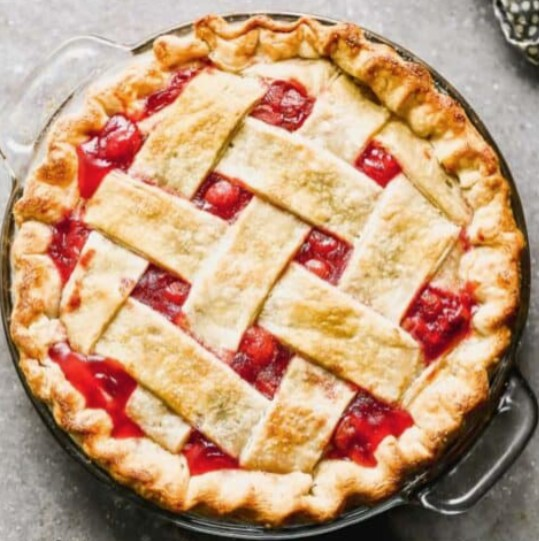
For an award-winning sugar-free cherry pie, start with tart cherries, a thickener that sets fast, and a quick pre-bake on the bottom crust. Cook the filling just until glossy so it tastes bright and slices clean, then vent and brush the top for that golden pie-shop finish. These steps stop the usual fails, runny filling, soggy crust, flat flavor, or cracked edges, and they work in a normal home kitchen.
You’ll learn how to build bold cherry flavor (even on a budget with frozen or canned no-sugar-added cherries), how to get clean sweetness without sugar, and how to bake a pie that sets so each slice holds. Follow the method, let it cool the right way, and you’ll serve a cherry pie that looks as good as it tastes.
What Makes a Sugar Free Cherry Pie Taste “Award-Winning” (Not Just “Good for Sugar Free”)
An award-winning sugar-free cherry pie doesn’t happen by accident. It comes from three choices you control every time: bold cherries, a sweetener that stays clean, and a filling texture that sets before it ever hits the crust. Nail those, and nobody says, “It’s good… for sugar-free.” They just go back for another slice.
Choose cherries for big flavor, fresh, frozen, or no-sugar-added canned
Cherry pie flavor lives or dies on the fruit. The biggest difference is tart vs sweet cherries, because they don’t bake the same and they don’t taste the same once you remove sugar.
- Tart cherries (sour cherries): Bright, punchy, bakery-style flavor. They stand up well to sugar-free sweeteners and taste more “classic cherry pie” with less effort.
- Sweet cherries: Softer, more mellow, sometimes a little jammy. They can still make a great pie, but they usually need help from lemon (for lift) and a pinch of salt (for depth) so the filling doesn’t taste flat.
Practical tips that keep flavor big and texture tight:
- Fresh cherries: Great texture, but they vary a lot. Taste one before you start. If they’re mild, plan on extra lemon zest, or a touch more sweetener. Fresh cherries also release juice as they sit, so give them a short rest after mixing to see what you’re working with.
- Frozen cherries: Thaw them fully, then drain well. Extra water is the fastest path to runny filling. A simple trick is to let them sit in a colander for 10 minutes, then gently blot with paper towels if they still look wet.
- No-sugar-added canned cherries: Choose cherries packed in water or juice, not syrup. Even “light” syrup makes sweetness harder to control and can push the filling toward gummy.
One small move that helps you stay in control: reserve a little cherry juice (a few tablespoons) after draining. If your filling thickens a bit too much on the stove, you can loosen it a spoonful at a time without watering down the flavor.
Budget tip that also improves consistency: frozen tart cherries are often the best value and the most reliable from bag to bag. They’re usually picked ripe, and you don’t waste money on pits and stems.
Pick a sugar free sweetener that tastes clean in fruit filling
Fruit fillings are where sugar-free sweeteners show their true colors. You want sweetness that supports the cherries, not something that tastes “diet” or changes texture after chilling.
Here’s what to expect from the common choices:
- Allulose: The closest to sugar in fruit desserts. It melts smooth, tastes clean, and stays smooth after chilling, which matters a lot for leftover pie.
- Erythritol blends: Can taste fine warm, but often re-crystallize in the fridge. That’s when the filling can feel crunchy or slightly gritty the next day.
- Monk fruit blends: The taste depends on what it’s blended with (often erythritol or allulose). Check the label, because one brand’s “1:1” sweetness can taste different from another.
- Stevia blends: A little can work, but too much can taste sharp or bitter in fruit. It’s easiest to use when it’s part of a blend made for baking.
A simple sweetness starting point (then adjust):
- For tart cherries: start around 1/2 to 3/4 cup granulated allulose (or the equivalent of your 1:1 blend) for a 9-inch pie filling.
- For sweet cherries: start around 1/3 to 1/2 cup.
The key is how you adjust. Don’t dump in extra sweetener and hope. Add it in small steps, stir well, and taste again. If the filling tastes “dull” but not too tart, don’t reach for more sweetener first. Try lemon zest or a pinch of salt, then taste. Those two tiny add-ins make cherry flavor sound louder without making it sweeter.
The texture checklist: how to know the filling will set before it goes in the crust
This is where “pretty good” turns into “people ask for the recipe.” A sugar-free cherry pie filling should look like it already knows how to hold a slice before you pour it into the crust.
Use this quick checklist while the filling cooks:
- Glossy look: The filling should turn shiny, not watery or cloudy.
- Slow, thick bubbles: You want bubbles that rise and pop lazily, not a fast boil that looks like soup.
- Spoon trail test: Drag a spoon across the bottom of the pan. The gap should close slowly, not rush together right away.
If you pour filling in while it still looks thin, it will sink into the crust and steam the bottom. That’s how you get a soggy base, even if the top looks perfect.
Cooling time is also part of the texture plan. The filling keeps setting as it cools, and that set is fragile when it’s hot. Cut too soon and you break the structure, so the juices run out and pool on the plate. Let the pie cool until it’s no longer warm to the touch, then slice. If you want clean, bakery-style wedges, chill it for a bit before cutting.
Recipe: Flaky Homemade Pie Crust Options (Choose One)
A thick, glossy cherry filling is only half the story. The crust is the stage it sits on, and it needs to stay crisp under juicy fruit. Pick one of these 9-inch crust options based on your time and comfort level. Both par-bake well, which is one of the easiest ways to avoid a soggy bottom.
Classic all-butter 9-inch pie crust (best flavor, still budget-friendly)
This is the old-school, flaky, all-butter crust that bakes up crisp and tastes like a real pie shop. Keep everything cold and don’t overwork the dough.
Ingredients (1 single 9-inch pie crust)
- 1 1/4 cups all-purpose flour (150 g)
- 1/2 teaspoon fine salt
- 1 teaspoon granulated sweetener (optional, helps balance tart filling)
- 1/2 cup unsalted butter, very cold, cut into 1/2-inch cubes (113 g)
- 3 to 5 tablespoons ice water (45 to 75 g)
- 1 teaspoon apple cider vinegar (optional, helps tenderness)
Directions (mix, chill, roll, shape)
- Chill first (this matters): Put the butter in the freezer for 10 minutes. Put your water in the fridge with ice cubes, then measure it cold. You want the butter hard-cold, and the water ice-cold.
- Mix the dry ingredients: In a medium bowl, stir the flour, salt, and sweetener (if using).
- Cut in the butter: Add cold butter cubes. Use a pastry cutter or your fingertips and work fast. Stop when you have a mix of pea-size butter pieces plus some smaller crumbs. Those butter chunks are your future flakes.
- Add water gently: Drizzle in 3 tablespoons ice water (and the vinegar, if using). Toss with a fork. Pinch a bit of dough in your fingers. If it holds together, stop. If it’s still dusty, add more water 1 tablespoon at a time.
- Fraisage for flaky layers (quick and simple): Dump the dough onto the counter. Use the heel of your hand to smear a few sections forward once, then gather it back together. Do this 3 to 4 times. It makes thin butter sheets, like folding paper into layers.
- Form and chill: Shape into a 1-inch-thick disc. Wrap tight. Chill at least 1 hour (2 hours is even better). If you’re short on time, 20 minutes in the freezer also works.
- Roll without sticking: Lightly flour your counter and rolling pin. Roll from the center out, turning the dough a quarter turn every few rolls. Aim for a circle about 12 inches wide (about 1/8-inch thick). If the dough cracks at the edges, press it back together and keep going.
- Transfer to the pie dish: Roll the dough up around the rolling pin, then unroll it into a 9-inch pie plate. Lift the edges and settle it in, don’t stretch it (stretching causes shrink).
- Trim and crimp: Trim so you have about a 1-inch overhang. Fold it under itself so the edge is thicker, then crimp with your fingers or press with a fork.
- Dock and chill again: Poke the bottom 15 to 20 times with a fork. Chill the shaped crust 15 to 30 minutes while the oven heats.
Par-bake (blind bake) for a crisp bottom
- Preheat oven to 400°F (204°C).
- Line the chilled crust with parchment paper (crumple it first, then flatten it, it fits better).
- Fill with pie weights (or dry beans or uncooked rice) all the way up the sides.
- Bake 15 to 18 minutes, until the edges look set and just start to turn pale golden.
- Lift out the parchment and weights. Return the crust to the oven and bake 5 to 8 minutes more, until the bottom looks dry and lightly golden, not shiny or raw.
- Cool before adding filling, or follow your pie recipe timing.
Money-saving note: Make a double batch, split into two discs, and freeze one. Wrap it tight, then place it in a freezer bag. Thaw overnight in the fridge, and you’ve got a head start on your next pie.
Easy press-in crust (no rolling, great for beginners)
If rolling dough stresses you out, this one is your friend. You mix, press, and bake. It’s less flaky than a rolled crust, but it’s quick, reliable, and hard to mess up.
Ingredients (1 press-in 9-inch pie crust)
- 1 1/4 cups all-purpose flour (150 g)
- 2 tablespoons granulated sweetener (optional)
- 1/2 teaspoon fine salt
- 6 tablespoons unsalted butter, melted and cooled 5 minutes (85 g)
- 2 tablespoons neutral oil (28 g)
- 3 to 4 tablespoons cold water (45 to 60 g)
Directions (press-in method + rim tips)
- Preheat oven to 350°F (177°C).
- In a medium bowl, stir the flour, sweetener (if using), and salt.
- Add melted butter and oil. Mix with a fork until it looks like damp sand.
- Add 3 tablespoons cold water and stir. The dough should look like soft cookie dough and hold together when pinched. If it’s crumbly, add 1 more tablespoon water.
- Add dough to a 9-inch pie plate. Press it into an even layer across the bottom first.
- Press dough up the sides. Use your fingers to keep thickness even, then use a flat-bottom measuring cup to smooth the base.
- Build the rim: pinch and press the top edge to make it slightly thicker than the sides. This helps it brown without breaking.
- Dock the bottom with a fork 15 to 20 times.
Par-bake
- Bake 12 to 15 minutes, until the crust looks dry and the edges are just turning light golden.
- Cool before filling.
Soggy-bottom protection that works every time (pick at least one)
Juicy cherry pie is great, but the bottom crust can turn soft fast. These simple fixes block moisture and keep the base crisp.
- Par-bake the bottom crust: Best when your filling is very juicy (frozen cherries, extra syrupy canned fruit, or a no-cook filling). It gives the crust a head start so it bakes, not steams.
- Egg white barrier: Brush a thin coat of lightly beaten egg white onto a warm par-baked crust. Bake 2 minutes to set it. This makes a moisture shield without changing taste.
- Light flour or ground nut layer: Sprinkle 1 to 2 teaspoons flour (or 1 to 2 tablespoons finely ground nuts, like almond meal) over the bottom before adding filling. Use this when you want extra insurance, especially with lattice tops where more steam can sink back down.
Recipe: Sugar Free Cherry Pie Filling That Sets (No Puddles, No Grit)
If you want clean slices, the filling has to set before it ever hits the crust. This stovetop method concentrates cherry flavor first, then thickens at the end so you get a glossy, slow-bubbling filling that cools into that bakery-style slice. It also helps prevent two common sugar-free issues: watery “puddles” and that gritty, crunchy sweetener feel after chilling.
Ingredients for one 9-inch sugar free cherry pie filling (about 5 cups)
Use these exact amounts as a strong starting point, then sweeten to match your cherries.
- 5 cups pitted tart cherries (fresh, or frozen thawed and well-drained)
- 1/2 to 3/4 cup granulated sugar-free sweetener (allulose or a 1:1 blend), adjust to taste
- 2 tablespoons lemon juice
- 1 teaspoon lemon zest
- 1/8 teaspoon fine salt (a pinch)
- 1/8 teaspoon almond extract (optional, go light)
- 3 tablespoons cornstarch or 2 1/2 tablespoons tapioca starch
- 1 tablespoon unsalted butter (optional, for shine at the end)
Step-by-step stovetop method for thick, glossy filling
This is a “watch the pot” recipe. Once you see the right bubbles and shine, you’ll know it’s going to set.
- Thaw and drain (if using frozen): Thaw cherries completely. Drain in a colander 10 minutes. Reserve 1/4 cup of the juice (or water) in case you need to loosen later.
- Start the cook: Add cherries, sweetener, lemon juice, lemon zest, and salt to a saucepan. Cook over medium heat for 3 to 5 minutes, stirring, until the cherries release juice.
- Simmer to reduce: Lower heat to medium-low. Simmer 8 to 12 minutes, stirring often, until the liquid looks slightly reduced and smells like cherries, not water.
- Make a slurry (prevents lumps): In a small bowl, whisk your cornstarch or tapioca starch with 3 tablespoons cool water (or reserved cherry juice) until smooth.
- Thicken and finish: Stir the slurry into the simmering cherries. Cook 1 to 3 minutes, stirring, until the filling turns glossy and you see slow, thick bubbles. Those lazy “lava bubbles” are the set signal.
- Cool before filling the crust: Remove from heat. Stir in butter (optional). Let the filling cool 10 to 15 minutes so it thickens up before it touches your crust.
Quick fixes if it’s not perfect yet:
- Too thin: Simmer 2 to 4 minutes longer. If it still looks loose, add a small extra slurry (1 teaspoon starch mixed with 1 tablespoon cool water), then simmer 1 minute.
- Too thick: Stir in reserved juice or water 1 tablespoon at a time until it’s thick but spoonable.
Flavor boosters that make it taste like a bakery pie (without adding sugar)
These are small, but they do big work. They make cherries taste louder without making the filling “more sweet.”
- Lemon zest (1 teaspoon): Add with the cherries at the start for a bright top note that survives baking.
- Almond extract (1/8 teaspoon): Stir in off heat at the end. Too much tastes perfumy fast.
- Pinch of salt (1/8 teaspoon): Add early. It won’t taste salty, it just rounds the fruit.
- Vanilla (1/2 teaspoon): Add off heat with the almond extract (or instead of it) for a smoother, pie-shop aroma.
Assemble, Bake, and Cool: The Exact Routine for a Golden Top and Clean Slices
At this stage, you’re not “making pie” anymore, you’re managing heat, steam, and structure. A sugar-free cherry pie can look perfect, then fall apart at the first cut if the assembly is sloppy, the bake is rushed, or the cooling is skipped. Follow this routine and you’ll get a deep golden top, a crisp bottom, and slices that stand up like they came from a bakery case.
How to assemble the pie so it does not leak and the edges look neat
A clean build starts with two things that feel boring but matter most: a cooled par-baked crust and slightly cooled filling. Warm crust softens fast, and hot filling melts the fat in your top crust before it hits the oven.
Use this order, every time:
- Set up the base: Place your cooled, par-baked bottom crust in the pie plate. If you’re using an egg white barrier, make sure it’s already baked and cooled too.
- Add slightly cooled filling: Let the filling sit 10 to 15 minutes so it thickens a bit. Spoon it in, then level it to the edges so it bakes evenly.
- Top it: Add a full top crust or a lattice. If you use a lattice, anchor the ends firmly into the rim so they don’t float when the filling bubbles.
- Seal and crimp neatly: Trim to an even overhang, then press top and bottom crust together first, before you crimp. That seal is your “gasket” against leaks.
- Vent: If you used a full top crust, cut 4 to 6 slits near the center. Steam needs an exit so it doesn’t push through the edge.
- Chill the assembled pie 10 to 15 minutes: This helps the shape hold and keeps the crimp from slumping.
- Bake on a rimmed sheet: Set the pie on a rimmed baking sheet to catch drips and make rotating easy.
If you ever get sticky leaks at the edge, it’s usually one of two things: the seal wasn’t tight, or the filling was piled too high in the middle.
Egg wash and simple sugar free toppings for shine and crunch
For a glossy, golden crust, whisk 1 large egg with 1 tablespoon water (or heavy cream for deeper color). Brush on a thin coat using a pastry brush. Focus on the top crust and the high points of the crimp, then use the brush to pull away any puddles. Too much egg wash can bake into thick patches and make the edge look uneven.
Simple sugar-free toppings (use one, keep it light):
- Chopped nuts (1 to 2 tablespoons), like pecans or almonds, for crunch.
- Cinnamon (1/8 to 1/4 teaspoon) for a warm finish.
- Heat-safe sweetener (up to 1 teaspoon) for sparkle, only if your sweetener browns well and doesn’t turn bitter. Allulose is often a better choice than erythritol here.
Apply toppings right after egg wash so they stick.
Bake times, temperatures, and the doneness cues you can trust
Cherry pie bakes best in two stages: a hot start to set the crust, then a lower temp to finish the filling without burning the rim. This matters even more with sugar-free pies because you’re relying on thickening and cooling, not sugar syrup, to hold the slice.
Rack position and setup
- Start on the lower-middle rack if you struggle with soggy bottoms.
- Keep the pie on a rimmed baking sheet (easy rotation, fewer oven messes).
Two-stage bake
- 425°F (218°C) for 15 to 20 minutes (sets the crust and starts browning).
- Reduce to 350°F (177°C) for 35 to 55 minutes, until done.
Foil edge shield timing
- Check at about 25 to 30 minutes total bake time. If the rim is already light golden, add a foil ring to protect it while the center finishes.
Doneness cues that don’t lie
- Deep golden crust on top, not pale tan.
- Steady bubbles in the center, not just around the edges. Center bubbling is the sign the filling is hot enough to set.
- Filling visibly bubbling through vents or lattice, with slow, thick pops (not watery fizz).
If the top browns fast but the center won’t bubble, keep the temp at 350°F and shield the top loosely with foil. Don’t pull it early, a cherry pie that never bubbled in the center is the pie that slices runny later.
Cooling and slicing schedule (this is where most pies fail)
Cooling isn’t “extra,” it’s the final step that turns loose filling into clean slices. Fresh from the oven, the filling is still fluid, even if it looks thick.
Use this schedule:
- 0 to 30 minutes: Cool on a wire rack, untouched. The filling is still very hot and mobile.
- 30 to 120 minutes: Keep cooling on the rack. The pie is setting, but slicing now usually causes a flood.
- Minimum before slicing: 3 to 4 hours at room temp, until the pie no longer feels warm underneath.
- For the cleanest slices: Refrigerate the room-temp pie 30 to 60 minutes before cutting.
A simple slicing method that keeps wedges neat:
- Use a sharp, thin knife and cut straight down (don’t saw).
- Wipe the blade between cuts with a damp paper towel.
- Lift each slice with a thin spatula, sliding in from the outer edge toward the tip.
If you want the first slice to look as good as the last, patience is the secret ingredient.
Enjoy!
An award-winning sugar-free cherry pie isn’t luck, it’s a repeatable routine. Start with cherries that taste bold (tart is your best bet), then sweeten to taste before you lock anything in. Cook the filling until it turns glossy with slow, thick bubbles, because that’s the signal it will set into clean slices.
Protect the crust so it stays crisp, par-bake when the fruit is juicy, and use a quick egg white barrier if you want extra insurance. Bake until you see bubbling in the center, not just at the edges. Then commit to the cool down, patience is what keeps the filling from turning into a puddle.
If you bake this pie, leave a comment and tell us what sweetener you used and whether your cherries were fresh, frozen, or canned.
Save this recipe for your next holiday, potluck, or budget-friendly treat, and share it with a friend who wants sugar-free desserts that still taste like the real thing.