A great pie crust is a small miracle. Getting it just right can turn even a simple filling into a perfect dessert or savory dish. Flaky but tender, sturdy but not tough—it’s one of those kitchen basics that everyone should know. In this complete guide, you’ll find step-by-step methods, exact measurements, and tips for classic butter pie crusts, double crusts, and fruit pie options (yes, canned fruit gets a place at the table). If you’ve ever wanted your pie to look—and taste—like it came from a bakery, this is where to start. Ready to learn how to make pie crust?
Ingredients
- 2 ½ cups (325g) all-purpose flour, spooned and leveled
- 1/2 teaspoon fine sea salt or 1 teaspoon kosher salt
- 1 tablespoon sugar, optional
- 1 cup (230g) very cold unsalted butter, cut into 1/2-inch cubes
- 6 to 8 tablespoons ice water, or more as needed
Directions:
Making Pie Dough in a Food Processor
- Combine the first portion of flour and butter: Add 1 ½ cups of flour, salt, and sugar to your food processor. Pulse a few times to combine. Next, scatter the cold butter cubes over the flour mixture. Process for about 15 seconds, until a dough or paste begins to form and there is no dry, uncoated flour left. The flour should take on a pale yellow color, and you should be able to press the dough together.
- Add the remaining flour: Scrape down the sides of the food processor bowl to redistribute the mixture. Add the remaining 1 cup of flour and pulse 4 to 5 times. The dough should look broken up and a little crumbly, with the flour evenly distributed.

- Add water and bring the dough together: Transfer the mixture to a medium bowl. Sprinkle 4 tablespoons of ice water over it, and use a rubber spatula to press the dough into itself. The crumbs should start to form larger clusters. To check if it’s ready, pinch a small amount of dough; if it holds together, you’re good to go. If it falls apart, add 2 to 4 more tablespoons of water and continue to press until the dough comes together. The amount of water needed depends on the level of humidity in your kitchen. Don’t worry if you need to add more than we do in our video.
- Form and chill the dough: Remove the dough from the bowl and gently form it into a ball on a clean surface. Cut the ball in half, then flatten each half into a disk. Wrap each disk tightly in plastic wrap and refrigerate for at least 1 hour, or up to 3 days. You can also freeze the dough for up to 3 months (just be sure to thaw it overnight in the fridge before using it).
Making Pie Dough by Hand
- Combine the first portion of flour and butter: In a medium bowl, add 1 ½ cups of flour, salt, and sugar. Whisk to combine. Scatter the cold butter cubes over the flour, then briefly mix with a fork or spatula to coat the butter. Using a pastry blender, cut the butter into the flour until the mixture has a coarse, mealy texture, similar to breadcrumbs. This should take about 1 to 2 minutes.
- Add the remaining flour: Scatter the remaining 1 cup of flour over the butter and flour mixture. Continue to work the mixture with the pastry blender for about 20 seconds, or until the flour is evenly distributed. The dough should look crumbly, with some pea-sized pieces of butter still visible.
- Add water and bring the dough together: Transfer the mixture to a medium bowl. Sprinkle 4 tablespoons of ice water over it, then use a rubber spatula to press the dough into itself. The crumbs should start to form larger clusters. To check if it’s ready, pinch a small amount of dough; if it holds together, you’re good to go. If it falls apart, add 2 or more tablespoons of water and continue to press until the dough comes together. The amount of water needed depends on the level of humidity in your kitchen.
- Form and chill the dough: Remove the dough from the bowl and gently form it into a ball on a clean surface. Cut the ball in half, then flatten each half into a disk. Wrap each disk tightly in plastic wrap and refrigerate for at least 1 hour, or up to 3 days. You can also freeze the dough for up to 3 months (just be sure to thaw it overnight in the fridge before using it).
Rolling Out Pie Dough
- Prepare the dough: Remove one of the dough disks from the refrigerator and let it sit at room temperature for at least 5 minutes. This makes the dough less stiff and easier to roll. Lightly flour your work surface, the top of the dough, and your rolling pin.
- Roll the dough: Using your rolling pin, roll the dough, turning it a quarter turn after every other roll, until you have a circle about 12 inches in diameter (perfect for a 9-inch pie dish). Periodically check to make sure the dough isn’t sticking to your work surface, and add a small amount of flour underneath as needed. You can always check the size by inverting your pie dish over the dough (you should have about a 1-inch edge all the way around).
- Transfer to the pie dish: To move the dough to your pie dish, carefully roll it around your rolling pin, then unroll it over the dish. Gently press the dough down into the dish, making sure it lines the bottom and sides without pulling or stretching it.
- Crimp the edges: Fold any overlapping dough underneath itself to create a thicker, 1/4-inch border that rests on the lip of the dish. To crimp, press the pointer finger of one hand against the inside of the dough while gently pressing with the knuckles of your other hand from the outside.

- For a double-crust pie, don’t crimp the bottom crust. Instead, roll out your second dough disk, fill the pie, then place the top crust over the filling. Trim the edges of both crusts and then crimp them together as described above.
- Chill the crust: Slide the unbaked pie crust into the refrigerator and chill for at least 30 minutes.
How to Blind Bake Pie Crust for Single Crust Pies (Quiches & Cream Pies)
- Preheat the oven: While the unbaked pie crust is chilling, preheat your oven to 375°F (190°C).
- Bake the crust (phase 1): Pierce the bottom of the chilled crust all over with a fork. Crumple up a sheet of parchment paper in your hands, then uncrumple it and use it to line the crust. Fill with pie weights, dried rice, or dried beans. Bake for 15 minutes. This is where you would stop for a partially baked crust, used in recipes that will bake the pie with a filling later on.
- Bake the crust (phase 2): For a fully baked pie crust, carefully remove the crust from the oven and lift out the parchment paper and weights. Return the crust to the oven and continue to bake until it is light golden brown, about 15 to 20 minutes more. Set aside to cool completely before filling.

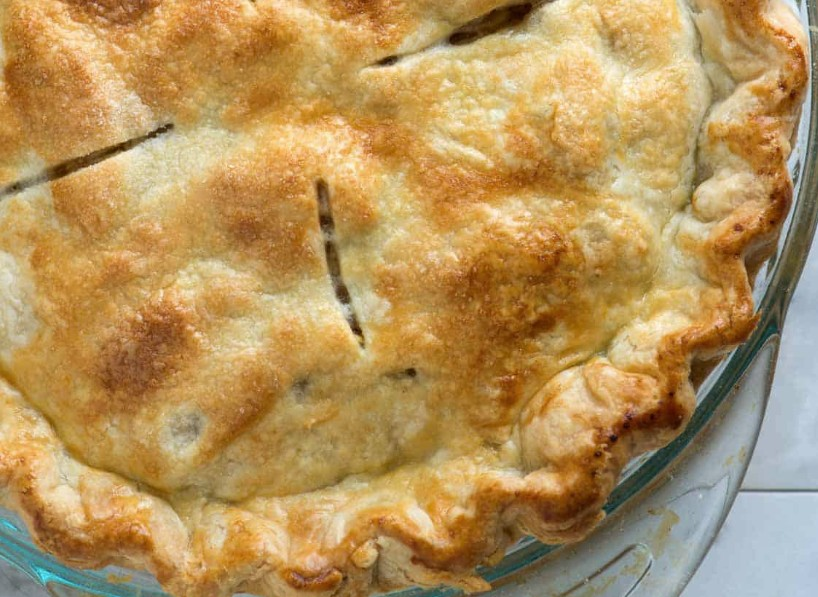
- Optional shiny, golden crust: For a shiny, golden finish, prepare an egg wash by whisking one egg yolk and 1 tablespoon of cream together. Lightly brush the bottom and sides of the crust, then bake for another 5 to 8 minutes, or until the crust is dry and shiny. Allow the crust to cool completely before filling.
How to Make a Double Crust Pie
- Note: Oven temperature and bake time will vary based on your specific pie recipe. Always refer to the recipe you are following
- Add the top crust: Roll the bottom crust out and place it into your pie dish as directed above. Then, roll out the second dough disk and place it over the filled pie. Use a knife or kitchen scissors to trim the dough so that it overhangs the edge of the dish by about 3/4-inch.
- Seal and crimp the edges: Fold the edges of the top crust underneath the edges of the bottom crust, pressing to seal them together and create a thicker border that rests on the lip of the dish. Crimp the edges as desired. Refrigerate the pie for at least 30 minutes before baking.
- Finish and bake: Just before baking, make an egg wash by whisking an egg yolk and 1 tablespoon of cream together. Use a pastry brush to coat the top crust lightly, then sprinkle with about 1 tablespoon of sugar. Cut 3 to 4 slits in the top of the pie to vent steam. Bake as directed by your specific recipe.
Understanding Pie Crust Basics
Pie crust is simple, but each ingredient matters. Flour forms the structure; fat gives flakiness and flavor; water brings it all together; salt heightens taste. What sounds basic can become tricky as you chase the dream of a crisp yet melting bite.
A crust can be flaky (think apple pie) or tender (a classic quiche). Flaky crusts have distinct layers that crackle when you cut into them. Tender crusts are more delicate, sometimes almost crumbly, and less about big flakes. The key is how much the flour’s gluten develops when water is added and mixed. Overmixing—like kneading bread—gives you a tough crust. Work lightly, and you create a home for all those pockets of delicious air and butter.
Pie crust has never been my strongest area in the kitchen. One of the best sites I’ve used is Inspired Taste. They include a step-by-step guide for flaky pie crust which is really good.
Flour Types and Their Impact
- All-purpose flour: The standard choice. Its moderate protein content gives you a blend of sturdiness and tenderness. It works well for most pie recipes.
- Pastry flour: Lower in protein, which makes crusts more delicate. You’ll get a softer, more tender bite.
- Bread flour: Avoid for pies. Too much protein creates tough, chewy crusts.
A good rule: If you want to avoid complicated juggling of flour types, stick with all-purpose for reliable results. If you’re curious or want to experiment, pastry flour will kick up the tenderness.
How Fat Creates Flakiness
Fat is where the magic happens. Cold pieces of fat trapped in dough melt as the crust bakes, releasing steam that forms flaky layers. The size of the fat pieces affects the final result—larger chunks lead to more distinct flakes.
Here’s the short list:
- Butter: Rich, flavorful, and gives a crisp texture. It’s the favorite for many bakers and lends a golden hue. It’s what you’ll use in the step-by-step recipe below.
- Shortening: Extra tender, almost crumbly, and holds shape well. However, it lacks the depth of flavor that butter brings.
- Oil: Fast and easy (no solid pieces to cut in), but less rich and flavorful.
Mix and match if you like, but a classic all-butter crust gives unbeatable flavor and flakiness.
Tools and Equipment Checklist
A bit of prep makes pie crust much easier and less messy.
- Rolling pin
- Pastry brush
- Plastic wrap
- 9-inch pie pan
- Kitchen scale (for accuracy)
- Measuring cups and spoons
- Fork or pastry cutter

Tips for Perfect Crust and Common Troubleshooting
Preventing Shrinkage and Cracking
- Let the dough rest after rolling, either in the fridge or freezer—this helps relax gluten and reduces shrinking.
- Never stretch the dough to fit the pie pan. If it tears, patch with dough scraps and press gently.
- Use parchment paper or foil filled with pie weights for blind baking. This keeps the crust flat.
- When edges look dry, brush lightly with a little cold water before baking.
- The dough should be cold to the touch but flexible. If it snaps or cracks, let it warm for a few minutes on the counter.
A buttery sheen and faint gold color on the edge of the rolled dough is a good cue it’s ready for the oven.
Adjusting for Altitude and Humidity
- In high humidity, hold back a tablespoon or two of water at first, then add only as needed.
- For high-altitude baking, you may need a bit more water and less fat. Start with 5 tablespoons water and add extra flour (a teaspoon at a time) if the dough feels sticky.
Canned Fruit and Fresh Fruit: Options for Filling
Fruit pies shine with flaky crust, no matter the season or pantry. If berries or apples aren’t available, canned fruit is a solid backup. Drain well before using and toss with a bit of flour or cornstarch to help thicken the juices. Fresh fruit gives the brightest flavor, but a good crust makes even canned filling taste special.
Share photos of your pie triumphs (or disasters—we’ve all been there) and let’s keep improving together. Want even more crust inspiration? Happy baking!
How to Make Classic Boston Cream Pie at Home
How to Make a Fresh Strawberry Cake at Home
How to Make Chewy Oatmeal Cookies Every Time